
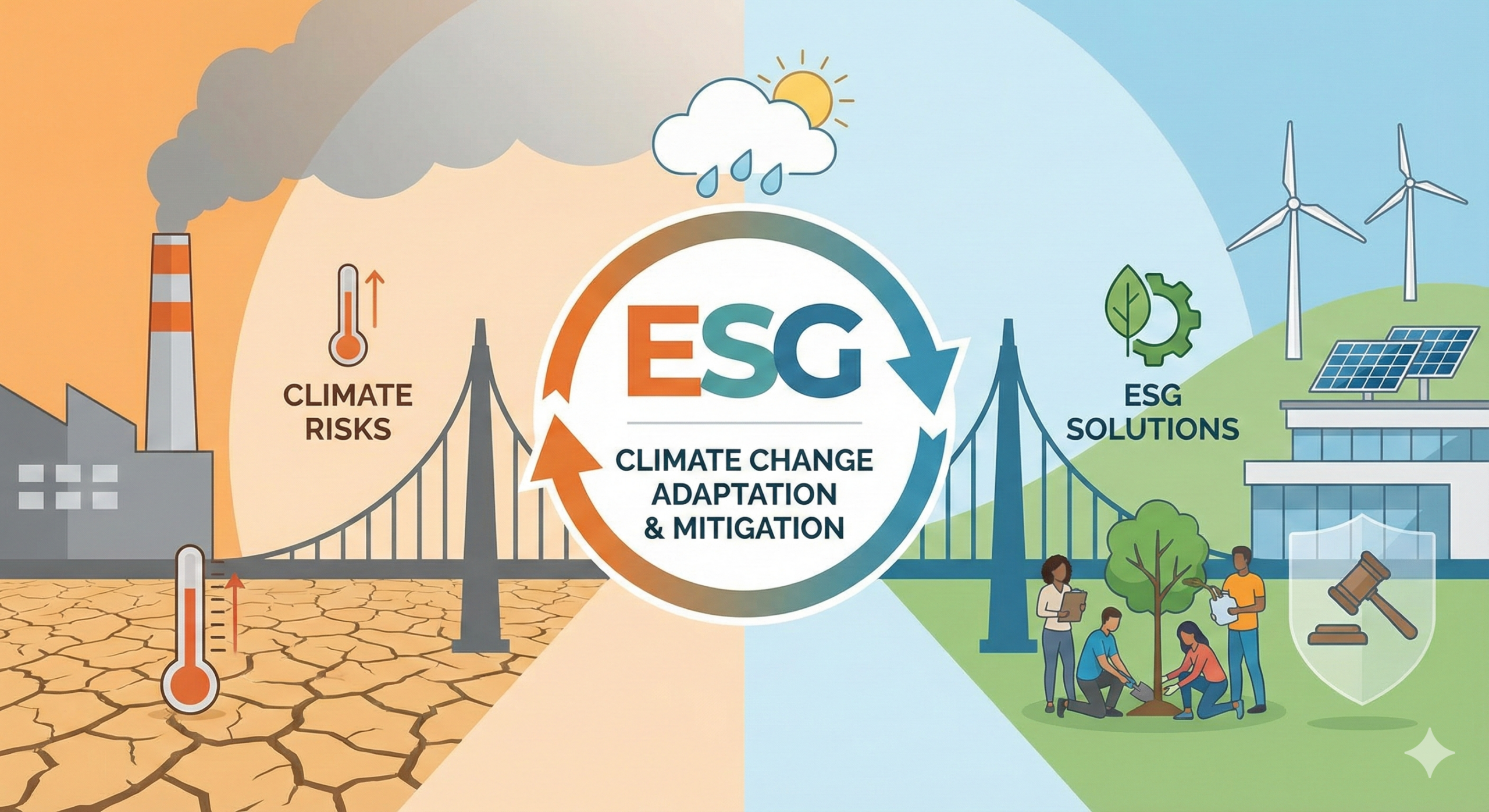
ESG stands for Environmental, Social, and Governance, representing a framework for evaluating an organization’s sustainability and ethical impact. This comprehensive course explores how ESG performance affects investor trust, public image, and long-term organizational success.
Course Overview:
This course covers the three critical pillars of ESG and their importance in modern business:
Environmental Pillar: Focuses on how a company interacts with the natural world, including carbon footprint reduction, renewable energy use, sustainable resource management, pollution control, and waste management.
Social Pillar: Examines relationships with employees, customers, and communities through fair wages, safe working conditions, diversity and inclusion, human rights in supply chains, and product safety.
Governance Pillar: Relates to corporate leadership, ethics, and transparency, including anti-corruption policies, board diversity and independence, fair executive compensation, and stakeholder engagement.
Key Topics:
– ESG reporting standards (GRI, SASB, TCFD, UN SDGs)
– Climate change causes and impacts
– The Paris Agreement and global climate goals
– ESG adoption benefits and challenges
– Case studies and practical implementations
– Measuring ESG success and integration into business strategy
Investors increasingly assess companies based on ESG performance, with funds showing high ESG ratings demonstrating lower volatility and higher resilience during crises. This course is essential for anyone involved in corporate governance, sustainability, or investment decisions.
Course Features
- Lecture 1
- Quiz 1
- Duration 10 weeks
- Skill level All levels
- Language English
- Students 2
- Certificate Yes
- Assessments Yes
- 4 Sections
- 1 Lesson
- 10 Weeks
- Why ESG Matters1
- Climate Change and Global Impact0
- ESG Reporting Standards0
- ESG Adoption and Implementation1